
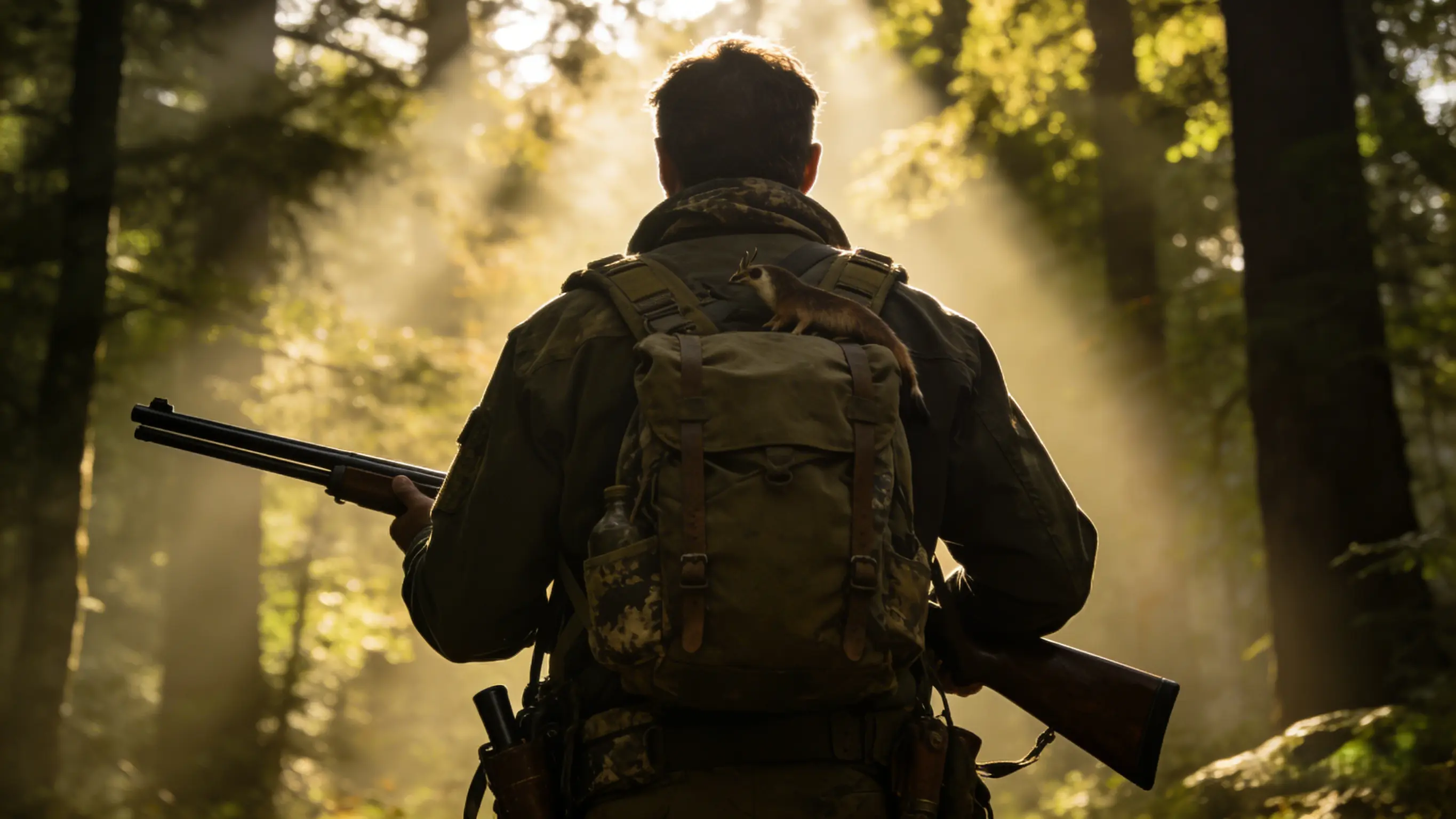
Detailed Breakdown of Hunting Equipment
- Weapon System
- Firearms
1.1 Rifles
Classification:
- Bolt-action: Highest precision, the first choice for hunting large prey.
- Semi-automatic: Suitable for continuous shooting, used for small prey or self-defense.
- Single-shot: Traditional hunting, often used for youth education.
1.2 Shotguns
Classification:
- Smoothbore: Standard shotgun, commonly used in 12/20 gauge, suitable for birds and small prey.
- Rifled: Used to fire slugs, capable of hunting large animals.
- Double-barrel: Traditional design, used for hunting birds and small prey.
1.3 Special Firearms
- Muzzleloader: Flintlock, percussion, inline types, used in specific hunting seasons to add a traditional experience.
- Pistol/Revolver: Portable, suitable for short-range shooting of small prey or self-defense.
- Archery
2.1 Traditional Bows
- Longbow: Classic design, no pulleys, requires great strength, suitable for long-distance precise shooting.
- Recurve: Bow limbs curve at the ends, suitable for beginners, affordable.
2.2 Modern Bows
- Compound bow: Equipped with a pulley system, labor-saving (usually 70-80% force reduction), high precision, the first choice for hunting.
- Crossbow:
- Recurve crossbow: Simple design, suitable for beginners.
- Compound crossbow: With pulleys, high power, suitable for large prey.
- Reverse limb crossbow: More stable center of gravity, easy to operate.
- Ammunition and Arrows
3.1 Ammunition
- Rifle ammunition: .243/.308/.30-06 (for deer), .300 Win Mag (for large prey).
- Shotgun shells:
- Buckshot: Large pellets, used for large prey.
- Birdshot: Small pellets, used for birds and small prey.
- Slug: Single large pellet, used for hunting deer and other large animals.
3.2 Arrow Components
Broadheads:
- Fixed-blade: Reliable, suitable for large prey.
- Mechanical/Expandable: Low flight resistance, deploys upon impact.
- Target point: Blunt head, used for practice.
- Clothing System (Three-Layer Dressing Method)
- Base Layer
- Function: Wicks sweat, regulates body temperature, and keeps dry.
- Material: Merino wool or synthetic moisture-wicking materials (such as Coolmax).
- Style: Long-sleeve/short-sleeve T-shirts, long pants/shorts, fit the skin without restriction.
- Insulation Layer
- Function: Keeps warm, insulates heat, and forms an air layer to lock in temperature.
- Types:
- Fleece jacket/vest: Lightweight and warm, suitable for cool weather.
- Down jacket: Extremely warm, suitable for severe cold environments.
- Synthetic insulation (such as Primaloft): Lightweight, quick-drying, suitable for humid environments.
- Outer Shell
- Function: Windproof, waterproof, wear-resistant, and protects the inner layers.
- Types:
- Hardshell: Fully waterproof (such as Gore-Tex), suitable for rainy and snowy weather.
- Softshell: Breathable, windproof, suitable for dry and cold weather.
- Hybrid: Combines the advantages of both, with strong adaptability.
- Professional Accessories
4.1 Headgear
- Camo hat: Concealing, sun-protective.
- Balaclava: Warm, covers the head and neck.
- Blaze orange safety hat/vest: Legally required, improves hunter visibility.
4.2 Handgear
- Breathable gloves: Flexible for operating weapons, suitable for mild weather.
- Insulated gloves: Thick, suitable for cold environments.
4.3 Footgear
- Hunting boots:
- Waterproof: Prevents dampness and cold, keeps feet dry.
- Scent-resistant: Reduces odor, improves concealment.
- Non-slip: Maintains stability on complex terrain.
- Gaiters: Protect against thorns, insects, and water.
III. Auxiliary Equipment
- Optical Equipment
- Binoculars: Observe distant prey, identify species and status.
- Scope:
- Fixed-power: Simple and reliable, suitable for fixed-distance hunting.
- Variable-power: Adapts to different distances, improves precision.
- Rangefinder: Measures target distance, adjusts aiming point, improves hit rate.
- Night vision/Thermal scope: For night hunting, tracks injured prey.
- Navigation and Positioning
- GPS unit: Marks hunting spots, plans routes, prevents getting lost.
- Map & Compass: Essential backup when GPS fails.
- Marking tape: Marks paths, facilitates returning to the camp.
- Sound and Scent Control
- Game calls: Simulate animal sounds to attract prey, such as deer calls, duck calls, and turkey calls.
- Scent control:
- Scent eliminator: Eliminates human odor.
- Cover scent: Simulates natural environmental odors.
- Scent-free detergent: Cleans hunting clothes to reduce odor residue.
- Lighting Equipment
- Headlamp/Flashlight: For night activities, tracking prey, and camp use.
- Blood tracking light: Tracks the blood of injured prey, especially in low-light environments.
- Support and Stability
- Shooting sticks: Improve shooting stability, suitable for long-distance precise shooting.
- Bipod: Supports rifles, maintains stability during long-time aiming.
- Prey Processing Tools
- Knife Series
- Hunting knife: Multi-functional, used for processing prey and setting up camps.
- Skinning knife: Thin and sharp, used for skinning to keep the fur intact.
- Boning knife: Narrow and flexible, used for separating meat from bones.
- Gut hook knife: With a hook on the back, used for gutting to avoid contaminating the meat.
- Closing knife: Handles small corners to ensure complete meat separation.
- Processing Equipment
- Game bags: Breathable mesh bags, used for transporting and storing prey to prevent contamination.
- Game hoist: Pulley system, allows a single person to lift the entire prey for easy skinning.
- Portable bone saw: Used for cutting the bones of large prey.
- Cooling towel/portable refrigerator: Preserves meat to prevent spoilage.
- Carrying Equipment
- Backpack System
1.1 Classification by Capacity
- Daypack: 1200-3000 cubic inches (20-50L), suitable for short hunting trips.
- Multi-day pack: 3000-4500 cubic inches (50-70L), suitable for 2-3 day hunting trips.
- Expedition pack: 5000-7000 cubic inches (80-120L), suitable for field hunting of more than 4 days.
1.2 Classification by Structure
- Internal frame: Close to the back, good balance, suitable for complex terrain.
- External frame: Strong load-bearing capacity, good ventilation, suitable for heavy loads.
1.3 Special Backpacks
- Tree stand pack: Designed specifically for tree hunting, with rifle/bow holders and equipment hooks.
- Tactical pack: MOLLE system, can freely attach accessories, suitable for multi-functional hunting.
- Hip pack: Lightweight, convenient for taking items, suitable for short trips or specific hunting scenarios.
- Other Carrying Equipment
- Cartridge bag: Leather or nylon material, used for carrying shotgun shells or rifle ammunition.
- Water bottle/hydration system: Hydration bladder (2L) + drinking tube, frees hands, essential for long-time hunting.
- MOLLE system: Modular equipment, can attach various accessories to backpacks, vests, and belts.
- Specialized Equipment for Different Hunting Scenarios
- Large Prey (Deer/Elk/Bear)
Core Equipment:
- Medium to large caliber rifle (.308/.30-06) or compound bow (at least 40 pounds of draw weight).
- High-power scope (3-9x or higher) and rangefinder.
- Sturdy backpack (50-70L) for carrying the meat after prey division.
- Game cart or deer drag for transporting large prey.
- Waterfowl Hunting (Ducks/Geese)
Core Equipment:
- 12/10 gauge shotgun, equipped with duck/goose-specific shotgun shells.
- Waders: Neoprene material, warm and waterproof.
- Waterproof parka: Fully waterproof, with large pockets for ammunition and equipment.
- Duck/goose decoys and calls.
- Blind: Hides hunters, usually used with decoys.
- Small Prey (Hares/Squirrels)
Core Equipment:
- .22 caliber rifle or 20 gauge shotgun.
- Lightweight backpack (20-30L) for carrying prey and basic equipment.
- Game vest: With ammunition pockets and prey hooks, easy to carry harvests.
- Turkey Hunting
Core Equipment:
- 12/20 gauge shotgun (with turkey-specific choke), equipped with #4/#5 shotgun shells.
- Full-body camouflage (from head to toe), including face mask and gloves.
- Turkey calls (box call/wingbone call) and decoys.
- Portable stool for long-time waiting.
VII. Safety and Legal Equipment
- Legal Essentials
- Hunting license: Different licenses are required for different species and regions.
- Tags: Used to mark legally harvested prey, must be carried with you.
- Landowner permission: Essential for hunting on private land.
- Safety Equipment
- Blaze orange vest/hat: Legally required, improves visibility between hunters to avoid accidental injury.
- Hearing protection: Protects hearing during shooting, reduces noise fatigue.
- First aid kit: Basic medical supplies for dealing with field injuries.
- Personal Locator Beacon (PLB): Sends distress signals in emergencies, suitable for remote areas.
VIII. Summary
The breakdown of hunting equipment follows the principles of "function first, scenario adaptation, and safety first". When choosing, you should consider: 1) Target prey type; 2) Hunting environment; 3) Hunting method; 4) Personal experience level. No matter what equipment you choose, you should clean and maintain it regularly, familiarize yourself with its use, and ensure safety and compliance.
Note: Hunting regulations vary by region. Before use, be sure to check local laws to ensure all equipment and operations comply with the regulations.